Hover over each skull to compare the different teeth shapes and sizes an herbivore might have. Then click Next below to continue with the module.
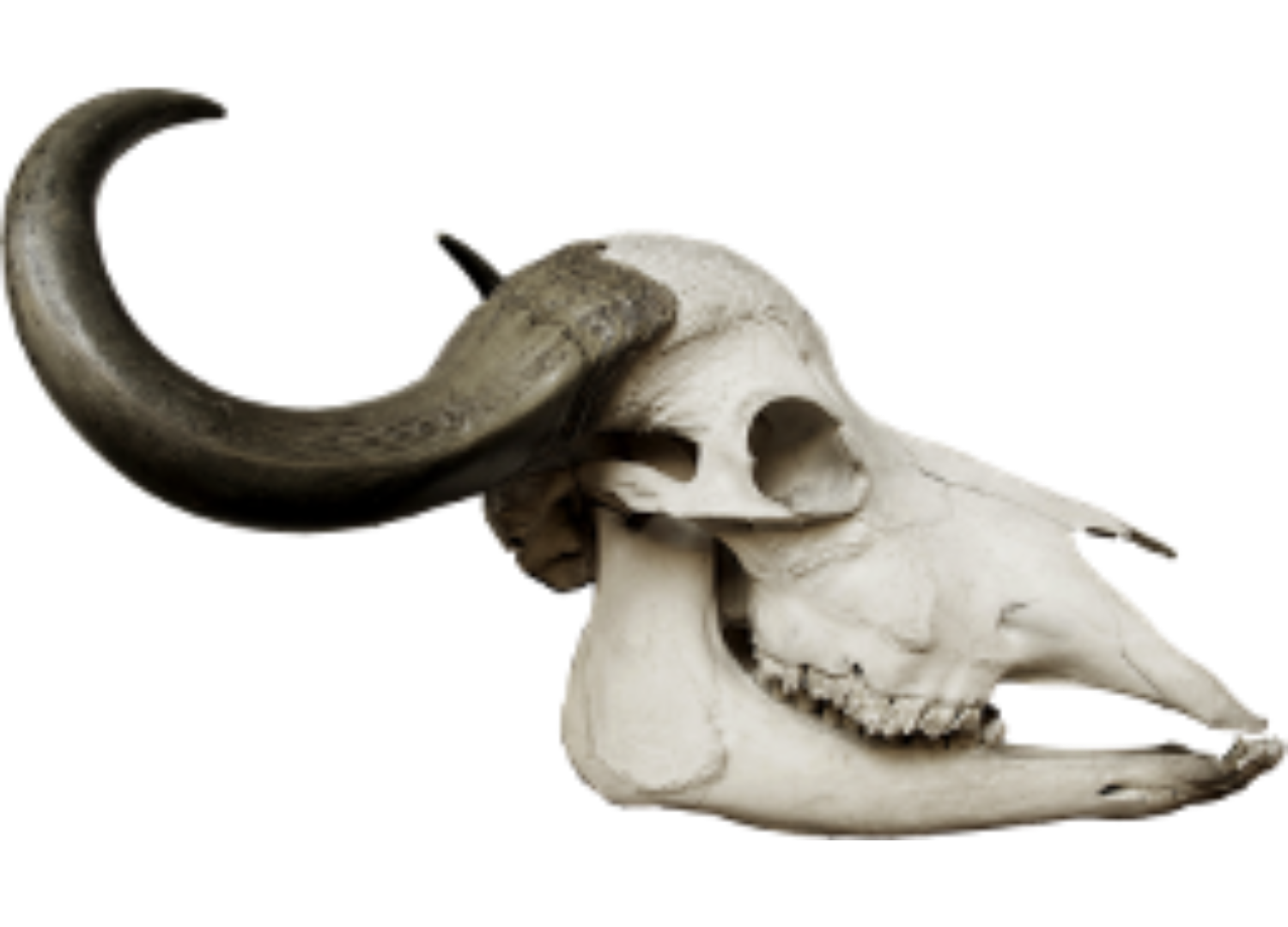
This is a skull from an African buffalo, a relative of the American buffalo that lives in Africa.
- There are a small group of incisors at the front of the mouth, just like humans.
- There are many more molars at the back of the buffalo’s mouth, just like humans too.
- If you zoom in closer, you can see the ridges on the molars that are used to grind and mash up the different plants and grasses the African Buffalo eats.
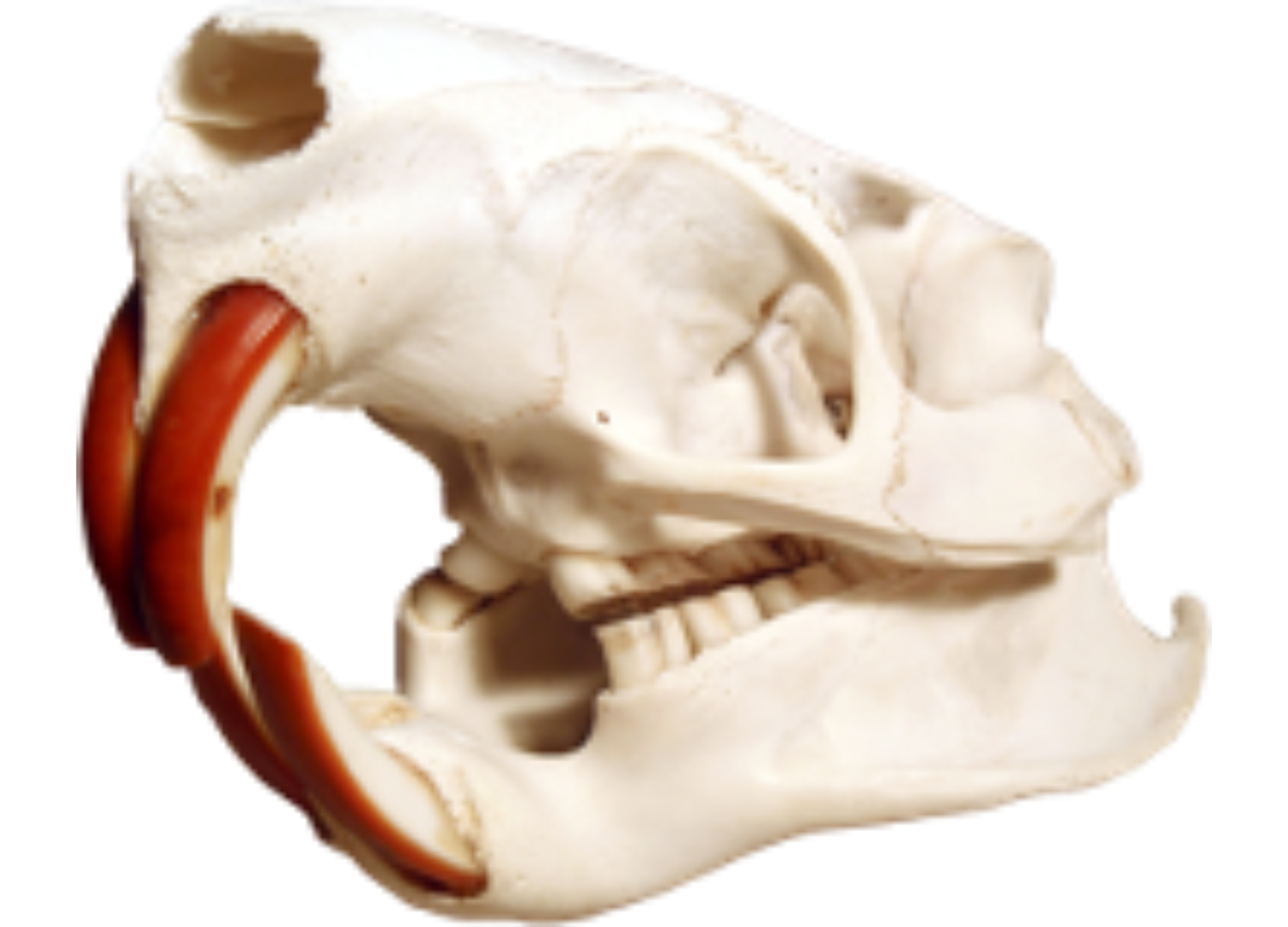
This is a skull from a nutria, a relative of the beaver that lives in South America.
- There are four continuously growing incisors at the front of the mouth.
- There are many more smaller molars at the back of the nutria’s mouth.
- The front incisors are orange because nutria, just like beavers, have extra strong enamel that contains iron protecting their teeth.

This is a skull from an African buffalo, a relative of the American buffalo that lives in Africa.
- There are a small group of incisors at the front of the mouth, just like humans.
- There are many more molars at the back of the buffalo’s mouth, just like humans too.
- If you zoom in closer, you can see the ridges on the molars that are used to grind and mash up the different plants and grasses the African Buffalo eats.

This is a skull from a nutria, a relative of the beaver that lives in South America.
- There are four continuously growing incisors at the front of the mouth.
- There are many more smaller molars at the back of the nutria’s mouth.
- The front incisors are orange because nutria, just like beavers, have extra strong enamel that contains iron protecting their teeth.